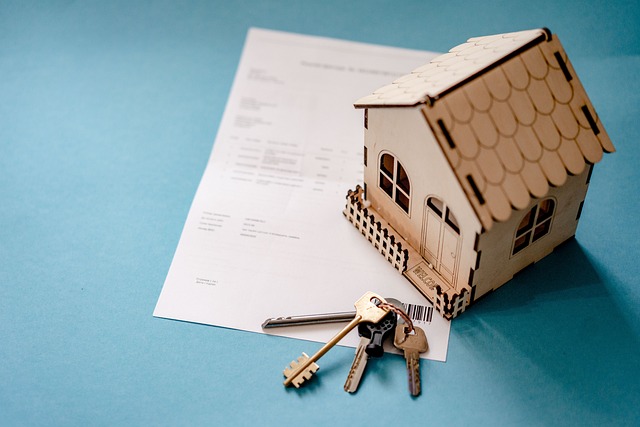
You can’t choose your neighbors, but if you could, wouldn’t you want them to be good? How willing would it be to try to make sure that was the case? Would you ask them to sign a document that they would at least try to be kind to you and everyone else in this area?
It’s not a fantasy: At least in one planned community called Silverwood, the developer requires homebuyers to sign a “pledge of benevolence,” creating a culture of listening to others, avoiding hate speech, and trying to engage on a personal level.
The community, based in Hesperia, CA, argues that clearly promoting civility can create better neighborhoods in an increasingly divided world.
But can developers, builders, sellers, or HOAs really enforce being nice? And beyond warm sentiments, does living in a “kind community” offer any real, tangible benefits to those looking to buy, live and sell there? Here’s what potential homebuyers need to know.
Legal Fact: It is not enforceable
Before you get upset over the idea that you really have to be nice to your neighbors if you want to live somewhere, understand that a pledge of kindness carries virtually no legal weight. This is an aspirational thing.
There are some important reasons for this. One is that kindness is a vague concept that would be difficult to pin down in any real way.
“Social covenants and restrictions must be specific, objective and consistently enforceable.” Donna Dimaggio Bergera Florida-based attorney specializing in HOA and condominium law. “Although associations can impose restrictions on property use, construction standards and certain conduct, a vague ‘niceness’ requirement lacks clear legal standards.”
Being excessively loud, leaving your trash can on the street, threatening or stalking your neighbors – these are obvious behaviors that the HOA can enforce. Kindness, as defined by things like tone of voice or feedback, is low.
Even if a covenant were more specific, imposing subjective standards of conduct would raise significant legal challenges around discrimination, selective enforcement, and potential violations of members’ rights.
“It would be nearly impossible to enforce and possibly illegal depending on how it’s drafted and enforced,” Berger says. “Even civility’s promises of good will can be used to exclude certain groups of people, especially if goodness is made to conform to certain cultural norms.”

So what’s the point of being one?
If promises of kindness are not enforceable, why do they exist? The answer lies in self-selection and community building.
Developers use these promises as a screening mechanism. Homebuyers who are put off by the idea of signing a pledge of kindness will look elsewhere, while those drawn to the concept will feel like they’re moving into a community of like-minded neighbors.
“I know that young families with children often embrace such an environment because it equates to ‘safer’ or ‘more accepting.’ Einstein Contea Florida real estate broker.
Tangible benefits of ‘good’ neighbourhoods
However, beyond the feel-good factor, research shows that strong social bonds and neighborly interactive communities offer measurable benefits.
“In general, social cohesion is associated with higher property values and fewer legal disputes,” says Berger.
This is evident in a few ways. For example, neighborhoods with higher social cohesion tend to have lower crime rates.
Research has also shown that residents of neighborhoods with stronger social ties report lower levels of depression, anxiety, and stress.
And some tenets of socially cohesive neighborhoods can drive home prices: A National Association of Realtors® survey found that more than 30 percent of Gen Z and Millennial respondents are willing to pay significantly more to live in walkable communities — where social interaction occurs more naturally.
That said, these communities are likely to have a particular commitment rather than say, because of knock-on effects.
“It’s not the behavioral contracts themselves that drive higher property values,” says Conti. “The reasons are linked to society maintaining standards of lawn care, noise restrictions, and the maintenance of social amenities such as order, cleanliness, and safety.”
What Home Buyers Should Consider About Kindergarten Communities
If you’re evaluating a society that has a benevolent covenant or similar behavioral covenant, here are key questions to ask:
What happens if someone breaks the covenant? If the answer is vague or nonexistent, you’re looking at an actionable document, not an actionable rule. Of course. That’s fine, but in your conversations with neighbors or sellers, try to figure out how to “enforce” that idea.
Are there specific behaviors that can be implemented? Check the HOA’s CC & RS (Covenants, Conditions and Restrictions) for the actual rules around noise, property maintenance, and neighbor behavior. These are not requirements of kindness, but they can lead to similar effects.
Do facilities and design features support community building? Promises aside, does the development include shared spaces, walkable areas and opportunities for neighbors to naturally interact? Physical design matters, perhaps even more than written commitments.
Finally, what is social culture really like? Talk to current residents. Ask about conflict resolution, the HOA’s response, and whether people really communicate with their neighbors.
Pleasing kindness is only one piece of the puzzle
Can your neighbors force you to be nice? No. Pledges of kindness carry no legal weight and cannot be enforced like traditional HOA rules. Also, compassion means different things in different places—what is considered neighborly in Brooklyn, NY, may be different from Brooklyn, IA.
But that doesn’t mean they’re meaningless. These commitments serve as cultural markers that attract certain buyers and shared values. And while you can’t command kindness, research shows that neighborhoods with strong social bonds provide real benefits.
The key is looking beyond the commitment to assess whether a community’s design, amenities, and existing culture actually support the promises of neighborhood interaction.